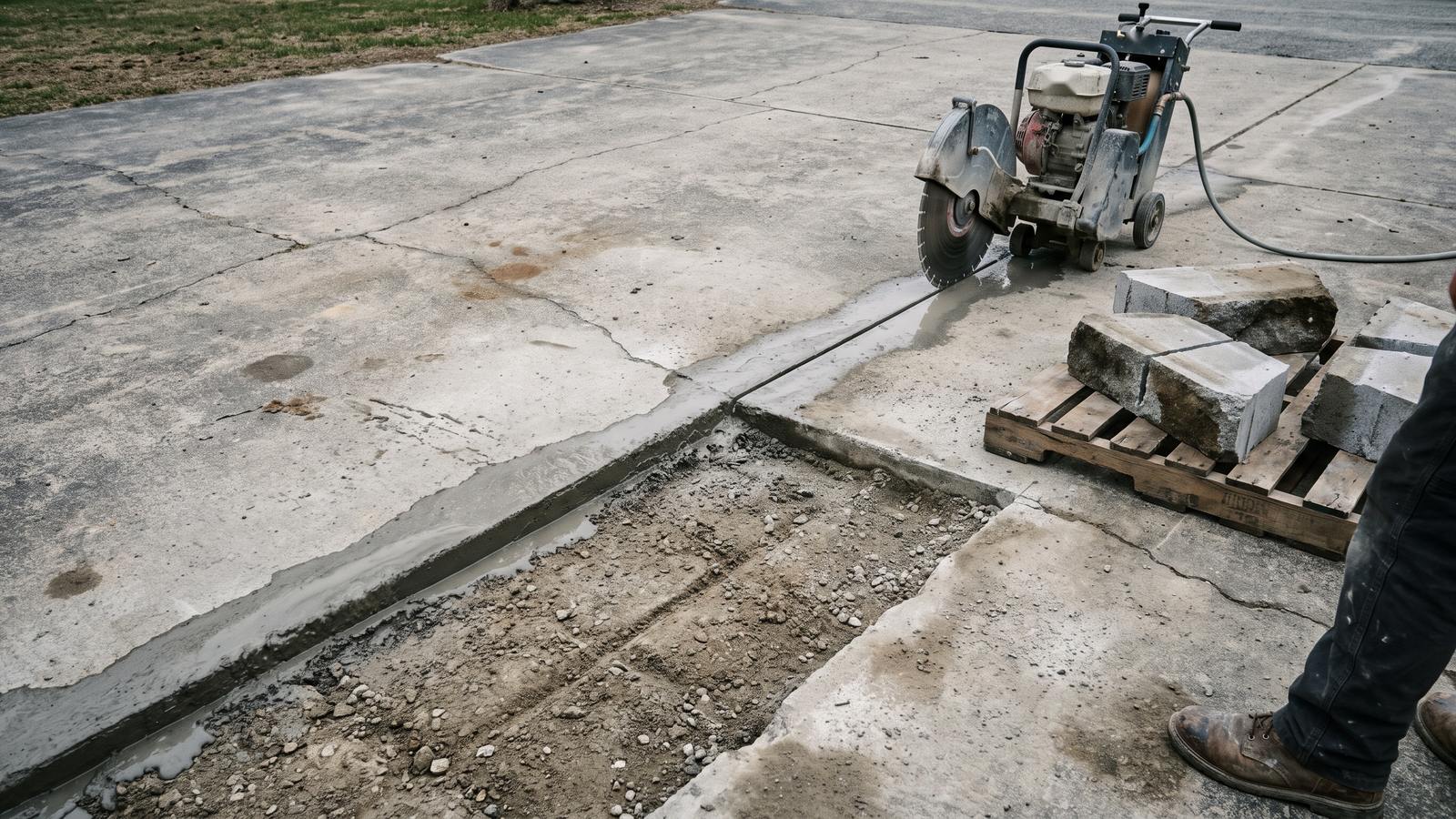
Concrete cutting and removal in Portland, ME
Saw cuts for partial replacement, floor trenches, wall openings, and old concrete broken out and hauled away.
Saw cuts, wall openings and tear-out for Portland homes
We handle concrete cutting and removal in Portland, ME: saw cuts that free part of a slab, walk or driveway for replacement, trenches through basement and garage floors, openings in foundation walls, and old concrete broken out and hauled away.
A saw cut lets us take out exactly what has to go and leave the rest sound. The Federal Highway Administration's procedure for full-depth repairs of concrete pavement starts the same way, isolating the section with full-depth saw cuts so it comes out with minimal damage to the concrete around it.
Most cutting is the first half of another job: a new driveway section, a drain line for a basement bathroom, an egress window for a basement bedroom. We plan the cut around what follows it and quote the two together, in writing.
Nearly half of Portland's homes, 45.8 percent, were built in 1939 or earlier, and an old floor or wall can hide drain lines, wiring and patches that no drawing shows. So we check what is in and under the concrete before we cut, and keep the saw's water and dust out of the house.
As a residential concrete contractor in Portland, we cut and remove concrete on your property. Work in the street or the public sidewalk needs City approval first, and we tell you at the site visit if your job reaches that far.
Free quote
Get a free written quote
Cutting out part of a slab, trenching a floor, opening a wall
Most concrete cutting at a house is one of three jobs: freeing a damaged section of a slab, walk or driveway, trenching a floor for new pipe, or opening a foundation wall.
Part of a slab, walk or driveway
We saw full depth along a joint or a straight line around the damage, lift the pieces out and check the base. FHWA prefers lifting old concrete out to breaking it up in place, which often damages the base. A sawn face passes no load across the joint on its own, so where cars will cross from old concrete to new, we drill and set dowels into the old edge. Our page on repairing damaged concrete covers when a section is worth replacing.
Trenches in basement and garage floors
A basement bathroom, laundry or floor drain usually means a trench: two parallel cuts, the strip between them broken out, and a dig to the depth the plumber needs. The pipe is the plumber's work, since the state licenses plumbers and Portland requires a permit for plumbing (City Code Sec. 6-92(a)). We backfill and compact the trench, then patch it in the layers the code as Maine adopted it sets for basement floors: a 4-inch base, a 10-mil vapor retarder lapped at least 6 inches at its joints, and concrete at least 3½ inches thick (R506). New floors are on our garage and basement slabs page.
Openings in foundation walls
A walkout door or an escape window means cutting through a foundation wall. We lay out the opening, cut it with water on the blade and take the concrete out in pieces, leaving square edges for the frame. A new opening changes the structure, so it needs a building permit and possibly an engineer's detail. New walls are on our footings and foundation walls page.
What sets the price of concrete cutting and removal
Cutting and removal is priced by how much concrete there is, what is in it, where it sits, and where it goes once it is out.
- Cuts: how many feet of cutting, through how thick a slab or wall.
- Steel: rebar or wire mesh slows cutting and breaking, and Riverside Recycling prices oversize concrete with wire or rebar in its own category.
- Inside or outside: indoor work adds sealing off the room, handling the slurry and carrying every piece out.
- Access: a machine at the concrete, or everything out by hand through a bulkhead or basement door.
- Disposal: the weight and the haul; Riverside charges less per ton for sorted inert material than for a mixed load.
- Openings: the wall's thickness, any engineer's detail, the window or door, and the area well.
- What follows: new concrete, dowels, the trench patch, permits, and cold-weather protection late in the year.
Each is a line in our written quote. For the wider picture, see how concrete jobs are priced in Portland.
Water on the blade, silica dust and working hours
Cutting and breaking concrete makes fine silica dust, so we cut with water, pick up the slurry as we go and seal the work area off from the rest of the house.
OSHA says respirable crystalline silica, particles at least 100 times smaller than ordinary sand, comes from cutting, drilling and crushing concrete, and that workers who breathe it are at increased risk of silicosis, lung cancer, COPD and kidney disease. Table 1 of its silica standard for construction, 29 CFR 1926.1153, sets the controls task by task:
- Saws: handheld and walk-behind saws with an integrated system that continuously feeds water to the blade, plus, indoors, a respirator with an assigned protection factor of 10 for the person sawing.
- Jackhammers: a continuous stream or spray of water at the point of impact, or a shroud with a dust collector.
- Cleanup: no dry sweeping or brushing where it could add to exposure, unless wet sweeping or HEPA-filtered vacuuming is not feasible, and limits on compressed air.
The standard protects the people doing the work, and the same methods protect your house: indoors we hang plastic over doorways, ask you to switch off forced-air heat while we cut, and vacuum the slurry up wet. Outside, we keep the slurry out of the street and the storm drains.
Noise and working hours
In residential zones, City Code Sec. 17-18 bars construction noise over 50 decibels within 500 feet of a home, hospital or nursing home between 7:00 p.m. and 7:00 a.m. from September through May, with work allowed until 8:00 p.m. from June through August. No construction may begin before 8:00 a.m. on a Saturday, Sunday or legal holiday. We book the saws and breakers inside those hours.
Breaking out old concrete, and where it goes
When a driveway, patio, walk, set of steps or slab comes out, we break it into pieces we can lift, cut the steel, and keep the concrete apart from the soil and gravel under it.
Chapter 6 of the City Code counts concrete as demolition debris, and ecomaine lists it among the demolition waste it does not accept, naming Riverside Recycling in Portland as one option. Riverside, which the City owns and CPRC Management runs, takes source-separated, unpainted concrete as inert material and says it seeks to maximize the recycling or reuse of what it accepts. It rejects loads with untested soil mixed in, so we load concrete clean.
On the islands, the City Code bars disposing of or storing demolition debris (Sec. 6-103(e)), so a tear-out on Peaks or another island includes getting the concrete back to the mainland, which we plan before we quote.
If new concrete is going back, a driveway torn out to its base becomes a new driveway built from the gravel up.
Egress rules, permits, Dig Safe and what is inside the slab
Before a blade touches the concrete, we find out what the code requires, which permits apply, and what is buried in or under it.
Egress windows for basement bedrooms
Maine's building code, MUBEC, has used the 2021 International Residential Code since April 7, 2025, and Portland enforces it (City Code Sec. 6-98). Under that code, a new bedroom in an existing basement needs an emergency escape and rescue opening (R310.7), and a window serving as one needs (R310.2, R310.4):
- a net clear opening of at least 5.7 square feet, at least 24 inches high and 20 inches wide
- the bottom of the opening no more than 44 inches above the floor
- below grade, an area well of at least 9 square feet and 36 inches each way, with a fixed ladder or steps if it is deeper than 44 inches
- a drain from the well to the foundation drainage system, unless the foundation sits on well-drained soil
A side-hinged or sliding door can serve instead (R310.3), and some existing windows qualify under a smaller standard (R310.7.1), so we ask the City before cutting. The Presumpscot clay under much of the Portland area has low permeability, a Maine Geological Survey paper notes, so we plan the well's drainage on site.
Permits and historic review
City Code Sec. 6-92(a) requires a permit to alter a building or structure, and the City's permit FAQ exempts window replacement only when no framing changes, so a new foundation opening is permit work. We confirm with Permitting and Inspections whether it needs an engineer's detail; we do not design structures, and we cut to the approved plans. In a historic district, a new opening or area well visible from a public way is subject to review under the City's Historic Resources Design Manual.
What is in the slab, and Dig Safe
Inside, the lines that matter are the house's own: drain and water pipes, radiant heat tubing and wiring. We ask what you know, look where they enter the floor, and where nobody can say what a slab holds, we have it scanned before we cut.
Outside, digging with power equipment is excavation under Maine's Dig Safe law, which counts whoever hires the dig as an excavator too. We mark the area in white and notify Dig Safe at 811 at least three business days, and no more than 30 calendar days, ahead. Utilities mark only the lines they own or maintain, the Public Utilities Commission's guide for property owners notes, so a well line, septic line or wiring to outdoor lights is the owner's to locate.
After the cut, and what happens when you call
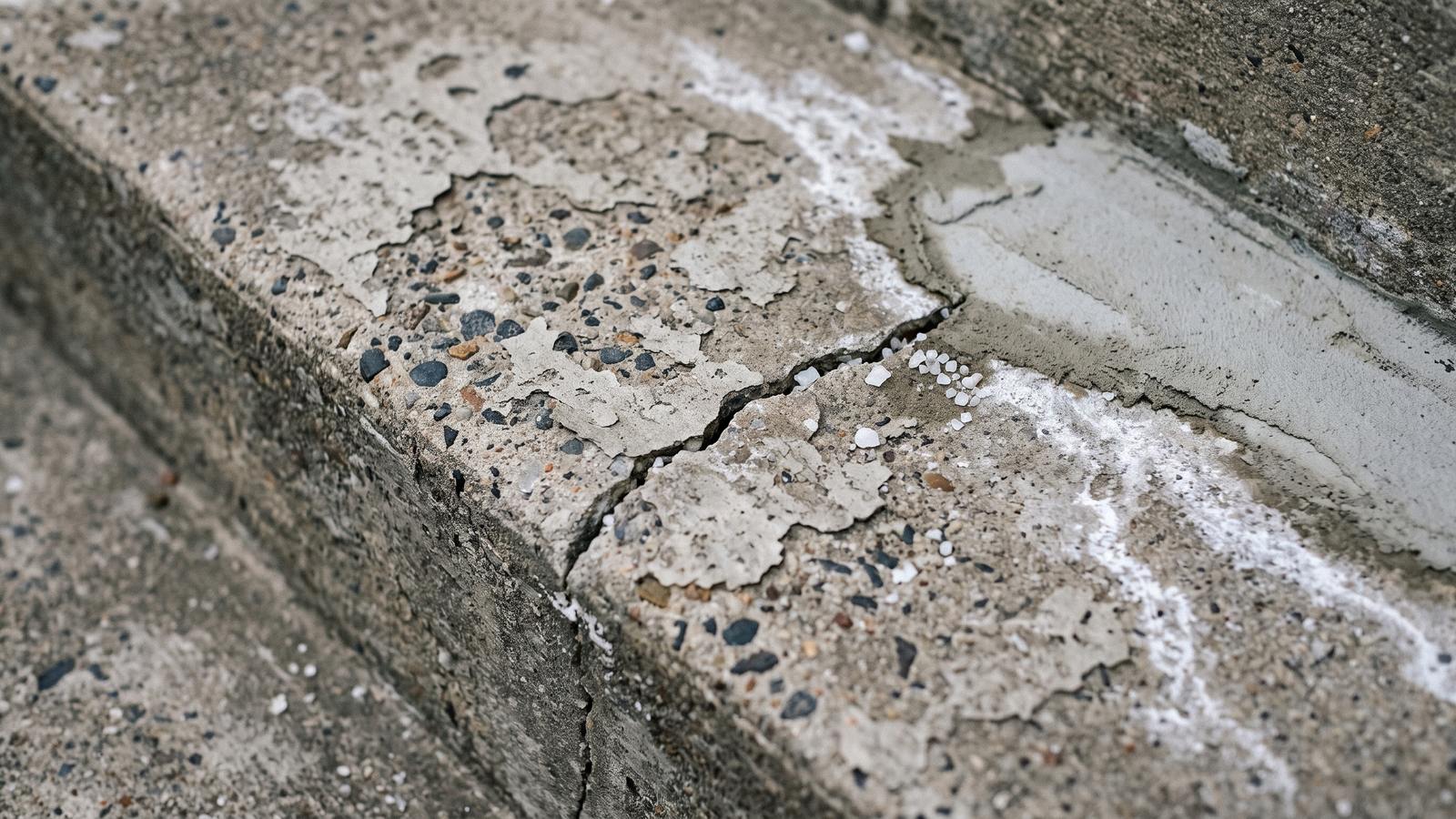
New concrete in a cut-out section or a trench needs what any new slab needs: a full cure and no salt in its first winter.
- Curing: PCA calls for at least 7 days of curing, longer around 40°F, so a patch stays covered.
- First winter: PCA says concrete poured late in the year should get no deicing chemicals its first winter, and that sand can give traction instead.
- Area wells: the code says an egress area well must be kept free and clear at all times (R310.4).
What happens when you call
- We ask what needs cutting or removing, what comes after it, and for photos.
- We look at the concrete, what may be in or under it, and how the pieces get out.
- We check permits, any engineer's detail and any historic review with the City.
- You get a written quote for the cutting, removal, disposal and any new concrete.
- We notify Dig Safe if there is digging, book the loud work inside the City's hours, and do the job.
Frequently asked questions
Can you cut out part of a concrete driveway instead of replacing all of it?
Usually, yes. We saw full depth around the damaged section, lift it out, check the base and pour new concrete to the old edge, doweled in where cars cross the joint. Federal Highway Administration guidance prefers lifting old concrete out, because breaking it up in place often damages the base.
Do I need a permit to cut an egress window into a foundation in Portland, Maine?
Yes. City Code Sec. 6-92(a) requires a permit before a building or structure is altered, and the City's permit FAQ exempts window replacement only when no framing changes. The City may also want an engineer's detail, so we check with Permitting and Inspections before we cut.
How big does a basement egress window have to be in Maine?
Under the 2021 residential code as Maine adopted it, the net clear opening must be at least 5.7 square feet, 24 inches high and 20 inches wide, with its bottom no more than 44 inches above the floor. Below grade, it needs an area well of at least 9 square feet and 36 inches each way.
Is the dust from cutting concrete dangerous?
It can be. Cutting and breaking concrete creates respirable crystalline silica, and OSHA says workers who breathe it are at increased risk of silicosis, lung cancer, COPD and kidney disease. OSHA's construction standard calls for saws that feed water to the blade continuously.
Where does old concrete go when it is removed in Portland?
Clean concrete can go to Riverside Recycling, the City-owned facility on Riverside Street, which accepts source-separated, unpainted concrete and turns away loads with untested soil mixed in. It should not go out with household trash, since ecomaine does not accept concrete.
What hours can concrete be cut in Portland, Maine?
In residential zones, City Code Sec. 17-18 bars construction noise over 50 decibels within 500 feet of a home between 7:00 p.m. and 7:00 a.m. from September through May, and after 8:00 p.m. from June through August. No construction may begin before 8:00 a.m. on weekends or legal holidays.
Need concrete cut or removed in Portland?
Call or send the form, and we will look at what has to come out before we put a price in writing.
- Photos of the concrete and the room or yard around it
- What comes next: new concrete, a bathroom, a bedroom or nothing
- Radiant heat, pipes or wiring in or under the slab, if you know of any
- How we get in: the driveway, a bulkhead or a basement door